

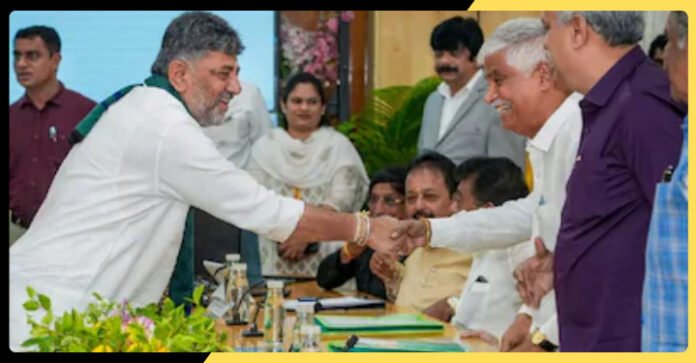

The Congress government in Karnataka has been hit by a fresh wave of political uncertainty after the recent Cabinet reshuffle triggered widespread dissatisfaction within the party. What was expected to be a routine exercise aimed at balancing regional representation and improving governance has instead exposed simmering tensions among legislators. The resignation of two Congress MLAs has intensified concerns over internal unity, while reports suggest that several other leaders are unhappy with the distribution of ministerial positions and may voice their dissatisfaction in the coming days.
The Cabinet reshuffle, carried out after weeks of consultations between the state leadership and the party’s central high command, was intended to inject fresh energy into the government. However, the inclusion of some legislators and the exclusion of others has left many party members disappointed. Several senior MLAs reportedly believed they deserved ministerial berths based on their experience, electoral performance, and contribution to the party’s victory in the Assembly elections. Their exclusion has become a major point of contention.
The resignation of the two MLAs has sent shockwaves through the Karnataka Congress. While both leaders cited dissatisfaction with the Cabinet formation and alleged neglect by the party leadership, they also emphasized that their decision reflected the frustration of many legislators who feel overlooked. Their resignations have sparked speculation about whether more lawmakers could follow suit if the leadership fails to address their grievances.
Political observers believe the developments underline the challenges of managing expectations within a party that secured a comfortable mandate. With a limited number of Cabinet positions available, accommodating the aspirations of dozens of legislators has proven difficult. Every reshuffle inevitably creates winners and losers, but the latest exercise appears to have widened existing factional divides rather than healing them.
The Congress high command has moved quickly to contain the fallout. Senior leaders are reportedly in touch with dissatisfied MLAs and have urged them to remain patient. Party officials have maintained that the Cabinet formation was carried out after careful consideration of regional balance, caste representation, administrative experience, and governance priorities. They insist that no leader has been ignored intentionally and that opportunities will arise in the future.
Chief Minister Siddaramaiah has appealed for unity within the party, stating that the government remains committed to fulfilling its promises to the people of Karnataka. He has urged party colleagues not to allow personal ambitions to overshadow public service. Deputy Chief Minister D.K. Shivakumar has echoed similar sentiments, expressing confidence that internal differences can be resolved through dialogue and mutual understanding.
The opposition Bharatiya Janata Party has seized the opportunity to criticize the Congress government. BJP leaders argue that the resignations expose deep cracks within the ruling party and demonstrate a lack of effective leadership. They have claimed that the Congress is more focused on internal power struggles than on governance, alleging that the Cabinet reshuffle has created instability at a crucial time for the state.
Meanwhile, governance remains a key concern. Analysts warn that prolonged political uncertainty could distract the government from addressing pressing issues such as infrastructure development, employment generation, agriculture, and welfare implementation. Investors and industry stakeholders also prefer political stability, making it important for the government to restore confidence quickly.
Several Congress legislators who have not openly rebelled are reportedly waiting to see how the leadership responds before deciding their next course of action. Some have demanded greater transparency in decision-making, while others seek assurances that future reshuffles and organizational appointments will fairly recognize their contributions.
Political experts note that internal dissent is not uncommon in Indian politics, particularly after Cabinet expansions or reshuffles. However, the manner in which party leadership responds often determines whether dissatisfaction fades or develops into a larger crisis. If handled effectively through dialogue and accommodation, the current unrest may remain temporary. If ignored, it could evolve into a prolonged challenge for the Karnataka government.
As the Congress leadership works to contain the rebellion, the coming days are expected to be crucial. Meetings between senior leaders and disgruntled MLAs may decide whether the party can restore unity or whether further resignations will deepen the political crisis. For now, the Karnataka Cabinet reshuffle has become more than an administrative exercise—it has emerged as a significant test of the Congress leadership’s ability to maintain discipline, manage competing ambitions, and preserve stability within one of its most important state governments.