

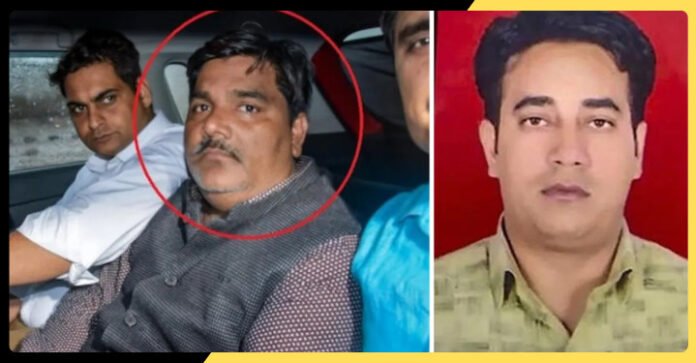

A Delhi court has sentenced former Aam Aadmi Party (AAP) councillor Tahir Hussain to life imprisonment for the murder of Intelligence Bureau (IB) officer Ankit Sharma during the 2020 northeast Delhi riots. The verdict marks one of the most significant judicial decisions arising from the communal violence that claimed more than 50 lives and left hundreds injured. The court described the killing as an act of “savagery,” observing that the victim was subjected to a brutal attack before his body was recovered from a drain in the riot-hit Chand Bagh area.
The sentencing came after the court found Hussain guilty of murder, criminal conspiracy, unlawful assembly, rioting, and several other offences under the Indian Penal Code. The prosecution argued that Hussain played a central role in orchestrating the violence and that his residence became a gathering point for armed individuals involved in attacks during the riots. According to investigators, the mob allegedly targeted Ankit Sharma, who was abducted, assaulted, and killed amid the unrest.
The case has remained one of the most closely watched trials connected to the February 2020 Delhi riots. Sharma, a 26-year-old Intelligence Bureau officer, had gone missing on February 25, 2020, after leaving his home in the Khajuri Khas area. His body was discovered a day later in a nearby drain bearing multiple injuries. The post-mortem examination revealed numerous stab wounds and blunt-force injuries, leading investigators to conclude that he had been subjected to a violent assault before his death.
During the trial, the prosecution relied on witness testimonies, forensic evidence, CCTV footage, mobile phone records, and other documentary evidence to establish Hussain’s alleged involvement. Prosecutors argued that Hussain’s premises were used to stockpile stones, petrol bombs, and other materials that were later used during the violence. They contended that he not only participated in the conspiracy but also encouraged and facilitated the attacks carried out by the mob.
The defence rejected the allegations, maintaining that Hussain had been falsely implicated due to political reasons. His legal team argued that he himself had sought police protection during the riots and claimed there was no direct evidence proving that he personally attacked Sharma. The defence also questioned the credibility of certain witnesses and challenged the prosecution’s interpretation of the available evidence.
After examining the evidence presented during the lengthy trial, the court concluded that the prosecution had established Hussain’s role beyond reasonable doubt. While delivering the sentence, the judge remarked that the murder reflected extreme brutality and had shaken the conscience of society. The court, however, stopped short of awarding the death penalty, choosing instead to impose life imprisonment after weighing the aggravating and mitigating circumstances.
The family of Ankit Sharma welcomed the verdict, describing it as an important step toward justice. Sharma’s relatives have consistently maintained that those responsible for his killing should face the strictest punishment under the law. They expressed hope that the judgment would strengthen public confidence in the judicial process and serve as a reminder that those responsible for communal violence would be held accountable.
The Delhi riots of February 2020 remain one of the capital’s deadliest episodes of communal violence in recent years. The clashes erupted in several northeast Delhi neighbourhoods amid tensions surrounding the Citizenship Amendment Act (CAA). More than 50 people lost their lives, hundreds were injured, and extensive damage was caused to homes, businesses, religious places, and public property. Multiple criminal cases were registered, leading to investigations by the Delhi Police Special Cell and Crime Branch.
The conviction of Tahir Hussain has drawn significant public and political attention because of his position as a former elected representative. The case has often been cited as one of the most prominent prosecutions arising from the riots. While supporters of the verdict have described it as a victory for justice, others continue to debate broader questions surrounding the investigations into the 2020 violence.
Legal experts note that Hussain retains the right to challenge both his conviction and sentence before a higher court. Under Indian law, convictions in serious criminal cases can be appealed, allowing appellate courts to review the evidence, legal findings, and sentencing. Any future appeal will determine whether the verdict is upheld, modified, or overturned.
The judgment represents a significant milestone in the legal proceedings connected to the 2020 Delhi riots. For the victim’s family, it brings a measure of closure after years of court hearings and legal arguments. For the justice system, the case highlights the importance of accountability in instances of large-scale communal violence. As the legal process moves forward through possible appeals, the verdict is expected to remain one of the most consequential outcomes related to the Delhi riots and the tragic death of Intelligence Bureau officer Ankit Sharma.