

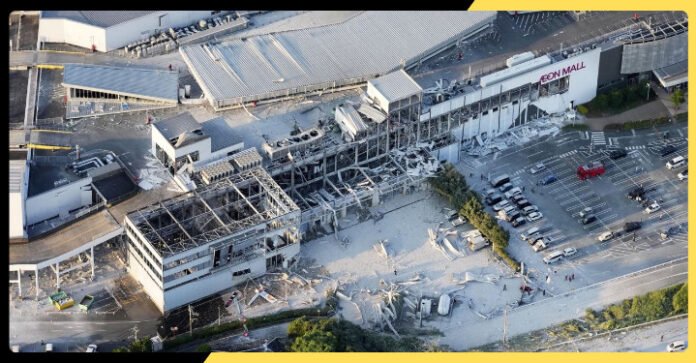

A powerful magnitude 7.1 earthquake struck Japan, triggering widespread panic and causing a deadly explosion inside a crowded shopping mall that left several people dead and many others injured. The disaster unfolded within seconds, turning what began as a strong seismic event into a devastating double tragedy. Rescue workers, firefighters, police officers, and emergency medical teams rushed to the scene as frightened residents fled collapsing buildings and damaged streets.
According to preliminary reports, the earthquake struck during one of the busiest hours of the day, sending violent tremors across several regions. Buildings shook for nearly a minute, traffic came to a halt, and thousands of people rushed outdoors in fear of aftershocks. Moments after the shaking began, a massive explosion tore through a shopping mall believed to have suffered structural damage during the quake.
Witnesses described hearing a loud blast followed by thick black smoke rising above the shopping complex. Pieces of concrete, shattered glass, and twisted metal were thrown across nearby streets. Shoppers trapped inside screamed for help as emergency alarms echoed throughout the damaged building. Several stores caught fire, forcing firefighters to battle both flames and unstable debris.
Authorities believe the explosion may have been caused by damaged gas pipelines or other infrastructure affected by the earthquake. Engineers and investigators have begun examining the site to determine the exact cause, although officials cautioned that it is too early to draw final conclusions.
Emergency responders immediately launched large-scale rescue operations. Search-and-rescue teams equipped with thermal imaging cameras, rescue dogs, and specialised equipment carefully searched through collapsed sections of the mall for survivors. Ambulances transported injured victims to nearby hospitals, many suffering from burns, fractures, cuts, and injuries caused by falling debris.
Hospitals in the affected region declared emergency status to handle the sudden influx of patients. Doctors, nurses, and medical volunteers worked around the clock to provide urgent treatment. Blood donation centres also appealed to the public for additional supplies as the number of injured continued to rise.
Japan’s government quickly activated its national disaster response system. Prime Minister and senior officials monitored the situation closely while coordinating rescue efforts with local authorities. Disaster management agencies urged residents to remain alert for aftershocks, avoid damaged buildings, and follow evacuation instructions issued by emergency officials.
Transport services experienced major disruptions following the earthquake. Several railway lines were temporarily suspended while engineers inspected tracks for damage. Highways were closed in certain areas because of cracked roads and fallen debris. Some flights were delayed as airport authorities conducted safety inspections.
Power outages affected thousands of households, while communication networks experienced temporary disruptions due to heavy demand. Utility companies deployed repair teams to restore electricity, gas, and water supplies as quickly as possible.
The tragedy once again highlighted Japan’s vulnerability to earthquakes despite having some of the world’s most advanced disaster preparedness systems. Strict building regulations have significantly reduced casualties in previous earthquakes, but secondary disasters such as fires, explosions, and infrastructure failures continue to pose serious risks.
Experts noted that earthquakes can damage underground gas lines, electrical systems, and structural supports, increasing the possibility of explosions even after the ground stops shaking. They urged the public to remain cautious during evacuation and avoid entering damaged structures until authorities declare them safe.
As rescue operations continue, families anxiously wait outside hospitals and emergency shelters for news of missing loved ones. Volunteers have joined local authorities in providing food, water, blankets, and temporary accommodation to displaced residents.
The coming days will focus on search operations, damage assessment, and restoring essential services. While Japan has repeatedly demonstrated remarkable resilience in the face of natural disasters, this latest earthquake and the deadly mall explosion have once again shown how quickly nature can transform an ordinary day into a national tragedy.