

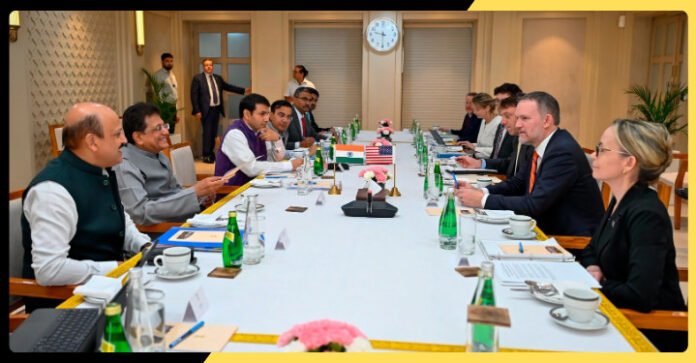

India has urged the United States to reconsider its proposed 12.5% tariff on selected imports, emphasizing that the move could disrupt the growing economic relationship between the two countries. New Delhi has called for constructive bilateral trade negotiations instead of additional tariffs, arguing that dialogue remains the most effective way to resolve outstanding trade issues.
According to officials familiar with the matter, India has conveyed its concerns through diplomatic and trade channels, highlighting that the proposed tariff could affect exporters, manufacturers, and businesses on both sides. Indian authorities believe that imposing fresh duties at a time when global trade faces several challenges may create unnecessary barriers and slow the momentum of expanding commercial ties.
The trade relationship between India and the United States has strengthened significantly over the past decade. Bilateral trade has reached record levels, supported by growing investments, expanding technology partnerships, and increased cooperation in sectors such as pharmaceuticals, engineering goods, information technology, textiles, agriculture, and renewable energy. Both countries have repeatedly expressed their commitment to deepening economic engagement through a balanced and mutually beneficial approach.
India has argued that the proposed tariff could increase costs for businesses that rely on cross-border supply chains. Exporters fear that higher duties may reduce the competitiveness of Indian products in the American market, while US companies importing Indian goods could also face higher expenses. Industry representatives have urged policymakers to consider the broader economic implications before implementing new trade restrictions.
Government officials have stressed that India remains committed to addressing trade concerns through negotiations rather than retaliatory measures. They believe that both nations have enough common ground to reach practical solutions on market access, tariffs, regulatory issues, and investment opportunities. By maintaining open communication, officials say, India and the United States can avoid unnecessary trade tensions and continue building a stronger economic partnership.
Trade experts note that disagreements over tariffs are not uncommon between major economies. However, they argue that India and the United States have successfully resolved several trade-related issues in the past through sustained diplomatic engagement. This history of cooperation has strengthened confidence that ongoing discussions can once again produce positive outcomes.
Business organizations in both countries have also called for greater policy stability. Many companies have invested heavily in expanding manufacturing operations, strengthening supply chains, and increasing exports between India and the United States. Industry leaders believe that predictable trade policies encourage long-term investments and help businesses plan future expansion with greater confidence.
The proposed tariff has also sparked discussions about the importance of concluding broader trade agreements. Economists believe that a comprehensive bilateral trade framework could reduce uncertainties, improve market access, and create fresh opportunities for businesses in both nations. Such an agreement could also enhance cooperation in emerging sectors, including digital trade, clean energy, semiconductors, artificial intelligence, and advanced manufacturing.
Indian exporters remain hopeful that ongoing negotiations will result in a mutually acceptable solution. Several export promotion councils have emphasized that maintaining competitive access to the US market is essential for supporting employment and economic growth. They have urged both governments to prioritize dialogue and avoid measures that could disrupt established trade flows.
Observers say the current discussions represent an opportunity for both countries to reinforce their strategic partnership beyond traditional trade concerns. India and the United States already cooperate closely in areas such as defense, technology, education, healthcare, and climate initiatives. Strengthening economic ties through fair and transparent trade policies could further enhance this relationship and contribute to long-term regional and global stability.
As bilateral negotiations continue, both governments are expected to remain engaged in finding common ground. While differences over tariffs persist, officials on both sides have reiterated their commitment to constructive dialogue and a rules-based trading system. The outcome of these negotiations will be closely watched by businesses, investors, and global markets, as it could shape the future direction of one of the world’s most significant economic partnerships.