

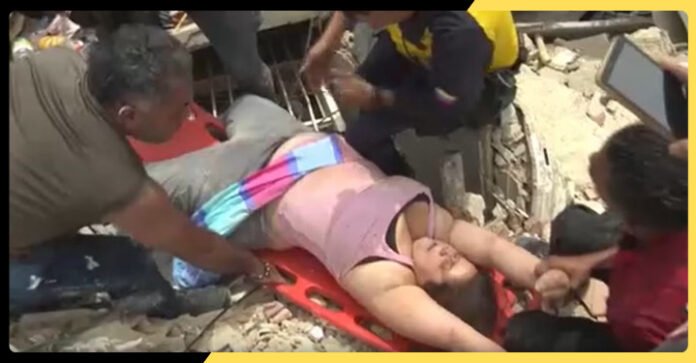

A dramatic rescue operation in Venezuela has captured global attention after emergency responders pulled a woman alive from the rubble following a powerful earthquake. The emotional moment unfolded after hours of careful digging through collapsed concrete, twisted metal, and debris. Rescue teams worked tirelessly, listening for signs of life before finally locating the survivor trapped beneath the wreckage.
Witnesses described an atmosphere filled with hope and anxiety as rescuers slowly removed debris by hand to avoid causing further collapse. Medical personnel stood ready nearby, monitoring the operation and preparing to provide immediate treatment. When the woman was finally brought to safety, cheers erupted from rescue workers and onlookers alike, highlighting the determination and teamwork that made the rescue possible.
Earthquakes often leave victims trapped for hours or even days, making every successful rescue a race against time. Survival depends on many factors, including available air pockets, injuries sustained, and weather conditions. Specialized rescue units use thermal imaging cameras, listening devices, and trained search dogs to locate survivors hidden beneath collapsed structures.
Following the rescue, the woman was transported to a nearby medical facility for evaluation and treatment. Authorities have not immediately released detailed information regarding her condition, but officials confirmed that she was conscious when rescued. The incident has become a symbol of resilience for communities affected by the disaster.
Emergency services continue searching damaged buildings for additional survivors while engineers assess the safety of nearby structures. Residents have been urged to remain cautious due to the possibility of aftershocks, which can weaken already damaged buildings and create additional hazards for rescue teams.
Natural disasters frequently test the preparedness and response capabilities of emergency agencies. The successful rescue underscores the importance of rapid deployment, coordinated communication, and trained personnel equipped to handle complex urban search-and-rescue operations.
As recovery efforts continue, humanitarian organizations are providing shelter, food, clean water, and medical assistance to displaced families. Local authorities are also evaluating infrastructure damage, including roads, hospitals, schools, and public utilities affected by the earthquake.
The rescue serves as a reminder of both the destructive power of earthquakes and the extraordinary dedication of first responders who risk their lives to save others. Stories like these often provide hope amid widespread devastation, inspiring communities to remain united throughout the recovery process.