


Film Ratings – 4/5 Stars
Ananya Panday and Lakshya Illuminate Vivek Soni’s Drama of Intimacy, Possession, and Moral Reckoning
Craft and Plot
The craft of Chand Mera Dil lies in its refusal to indulge in the ornamental excesses of mainstream Hindi romance. Vivek Soni constructs a narrative that is less about the decorative intoxication of passion and more about the arduous labour of comprehension. The plot does not pivot upon a singular cataclysmic rupture; instead, it chronicles the gradual attrition of tenderness between Chandni and Aarav. Their relationship begins with effervescent attraction, only to be slowly corroded by insecurity, possessiveness, and the sediment of repeated transgressions. What distinguishes the film is its refusal to collapse into binary moralities. Chandni is not fetishized as a martyr, nor is Aarav caricatured as a tyrant. Both are rendered with chiaroscuro complexity, their vulnerabilities and vanities coexisting in uneasy tandem. The screenplay recognizes that relationships rarely implode in theatrical detonations; they fray through silences, half hearted apologies, and the corrosive repetition of emotional abrasion.
Performance
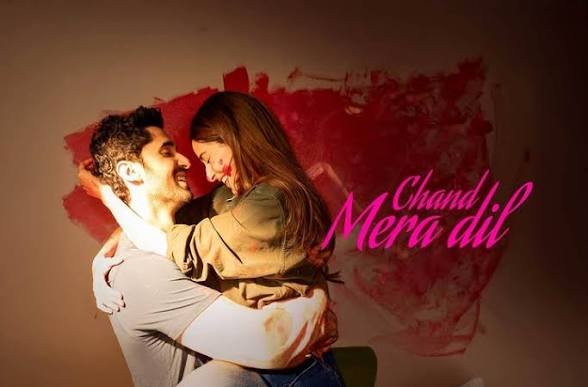
Ananya Panday delivers a performance of remarkable restraint, locating Chandni’s anguish not in spectacle but in internalized pauses and glances. Her craft lies in registering discomfort before detonating into anger, allowing the audience to witness the gradual awakening of a woman discerning the difference between being cherished and being controlled. Lakshya, as Aarav, oscillates between warmth and volatility with persuasive dexterity. He resists the temptation to play Aarav as a villainous archetype, instead imbuing the character with tenderness sufficient to sustain the romance and sharpness enough to render the damage palpable. His portrayal of vulnerability metastasizing into control is particularly compelling, giving Aarav a textured legibility that transcends simplistic condemnation. Together, Panday and Lakshya generate a chemistry that is both intoxicating and corrosive, their relationship credible precisely because it embodies both the exhilaration of attachment and the exhaustion of repeated emotional abrasion.
Direction
Vivek Soni’s directorial compass is calibrated towards clarity and patience. He understands the visual grammar of mainstream Hindi romance but refuses to allow gloss to suffocate gravitas. His staging of arguments avoids bombast, his rendering of romantic interludes resists saccharine relief. Instead, he allows scenes to breathe, to exist beyond their immediate dramatic utility, thereby imbuing the film with cumulative force. Soni’s greatest triumph lies in his refusal to sermonize. He does not wield the camera as a moral cudgel; rather, he orchestrates a quiet observation of conduct, allowing the audience to discern the insidious ways in which affection can curdle into coercion.
Story and Screenplay
Co written by Vivek Soni and Tushar Paranjape, the screenplay is the film’s vertebral column. It navigates the treacherous terrain of emotional manipulation with maturity and sobriety, avoiding both indulgence and didacticism. The writing acknowledges that relationships are rarely divisible into neat categories of victimhood and culpability. Harm is unmistakable, yet the psychological confusion that perpetuates cycles of apology and relapse is rendered with empathetic acuity. This refusal to flatten complexity is what grants the film its moral seriousness. The story is not about whether love exists between Chandni and Aarav; it is about whether love, by itself, is enough when respect begins to thin out.
Technical Analysis
Debojeet Ray’s cinematography is a study in emotional meteorology. His lens does not merely beautify the protagonists; it tracks the shifting climate of intimacy. Spaces that initially radiate romance gradually acquire claustrophobic undertones as the relationship tightens. Light, framing, and proximity are deployed to suggest the oscillation between comfort and suffocation. This is cinematography that serves the emotional architecture rather than ornamental spectacle, and its subtlety is its strength. Prashanth Ramachandran’s editing ensures that the film’s intensity never metastasizes into heaviness. Emotional scenes are permitted to settle, but never to sprawl. The transitions between phases of the relationship are fluid, giving the romance the texture of memory rather than mere chronology. Sachin Jigar’s score provides the film with a melodic interiority. Songs such as Khasiyat and Aitbaar do not function as decorative interludes; they are woven into the film’s emotional fabric. The title track, Chand Mera Dil, becomes a leitmotif of longing and accountability, underscoring the film’s insistence that love must answer for conduct.
Box Office Analysis
From a commercial vantage, Chand Mera Dil may not ignite the box office with explosive fervour. Its reliance on internal conflict rather than crowd pleasing theatrics renders its trajectory steadier than spectacular. Yet this very restraint is what ensures its longevity. The film’s emotional intelligence and moral seriousness grant it a resonance that transcends ephemeral numbers. Critics have accorded it a rating of four out of five, while its box office performance hovers at a more modest three out of five. The film’s commercial appeal may be steadier than explosive, but its emotional gravitas ensures that it will endure in cultural memory.
Verdict
Chand Mera Dil is a mature, sensitive, and impressively composed romantic drama. Its strength lies not merely in its performances or direction, but in its ethical architecture—its recognition that love, without respect, is insufficient. While its commercial trajectory may be steadier than spectacular, the film’s emotional intelligence ensures its longevity. It is a romance that lingers because it refuses to flatter love; it demands that love justify itself. In the final analysis, Chand Mera Dil is not merely a film about romance. It is a film about the moral musculature of intimacy, about the necessity of boundaries, about the dignity of self respect. It is a cinematic reminder that passion, without accountability, is merely another form of pressure. This is why Chand Mera Dil endures—not because it dazzles with spectacle, but because it resonates with truth.
Advertisement
Latest articles
Advertisement
Advertisement