

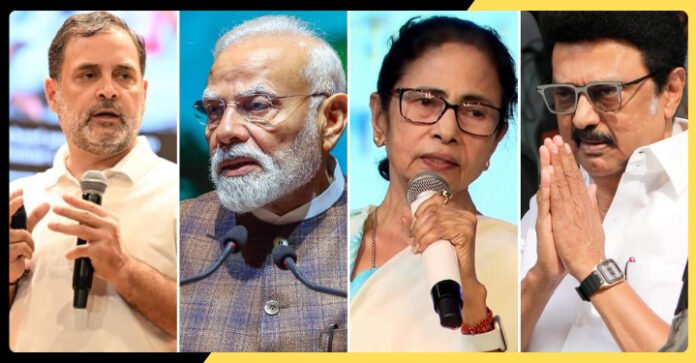

The 2026 Assembly election results have emerged as one of the most significant political developments ahead of the next general election, offering a crucial test for the Bharatiya Janata Party (BJP), the Congress, and a range of influential regional parties. Spread across politically sensitive states, the elections were closely watched not only for government formation but also for the larger message they send about India’s changing electoral mood.
For the BJP, the elections were seen as a referendum on its governance model, welfare outreach, and the continued popularity of Prime Minister Narendra Modi. The party entered the contest with aggressive campaigns focused on development, infrastructure, national security, and welfare schemes aimed at women, youth, and rural voters. In several states, the BJP relied heavily on centralized leadership and sought to convert national popularity into regional victories.
The Congress, meanwhile, approached the elections as an opportunity to revive its national footprint after mixed performances in recent years. The party emphasized unemployment, inflation, farmer distress, and social justice issues while attempting to rebuild grassroots networks. Its campaign strategy centered on projecting regional leadership instead of depending entirely on central faces, a move political observers viewed as an attempt to reconnect with local voters.
Regional parties also played a decisive role in shaping the electoral narrative. In states where local identity, caste dynamics, and linguistic pride dominate politics, regional satraps managed to maintain significant influence. Leaders of state-based parties framed the elections as a battle to protect federalism and regional autonomy against national dominance. This strategy appeared to resonate strongly in states with long-standing regional political traditions.
One of the biggest takeaways from the election results has been the continued importance of coalition politics. Even in states where national parties performed strongly, regional alliances proved critical in influencing final outcomes. Analysts believe the results indicate that while national narratives remain important, local governance issues and regional leadership continue to determine voter behavior in Assembly elections.
The elections also highlighted the growing role of welfare politics. Free electricity schemes, cash assistance programs, healthcare benefits, and subsidies became central campaign themes across parties. Voters appeared increasingly focused on tangible benefits and local governance performance rather than ideological positioning alone. This trend reflects the changing expectations of Indian voters, especially among economically weaker sections and first-time voters.
Another notable feature of the elections was the increasing participation of young voters and women. Political parties invested heavily in targeted outreach campaigns through social media, digital platforms, and grassroots mobilization. Women-centric welfare programs and promises related to education, employment, and safety became key talking points in several constituencies.
The results have also intensified discussions around opposition unity ahead of future national elections. While some opposition parties succeeded in strategic alliances, others faced criticism for fragmented contests that benefited rivals. Political observers argue that the Assembly results may influence future coalition negotiations and seat-sharing strategies at the national level.
For the BJP, victories in key states would strengthen its narrative of political dominance and organizational depth. For the Congress, gains in competitive regions could provide momentum and restore confidence within the party rank and file. Regional parties, on the other hand, are likely to interpret strong performances as proof that state-level leadership remains indispensable in Indian politics.
As celebrations and political calculations continue, the 2026 Assembly elections are being viewed as more than just state contests. They represent an evolving political transition where governance, welfare delivery, regional identity, and leadership credibility are all competing to shape the future of India’s democracy.