

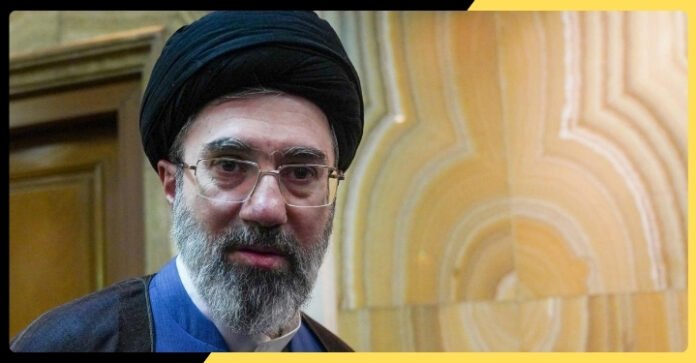

Iran’s newly appointed Supreme Leader, Ayatollah Mojtaba Khamenei, has declared that attacks on Gulf Arab neighbours will continue, marking a significant escalation in the ongoing regional conflict linked to the Iran-Israel war. The statement, his first major public message since assuming power, signals Tehran’s determination to intensify pressure on countries seen as supporting Israel and the United States.
Khamenei’s remarks come at a time when tensions across the Middle East are already at a boiling point. The conflict dramatically intensified after the killing of Iran’s former Supreme Leader, Ayatollah Ali Khamenei, in a joint U.S.-Israeli strike earlier in the war. Since then, Tehran has launched waves of missiles and drones across the region, targeting U.S. bases, Israeli positions, and infrastructure in several Gulf states.
In his statement broadcast on Iranian state television, the new Supreme Leader warned that regional governments cooperating with Washington or Tel Aviv could face sustained military action. He also called for the removal of U.S. military bases from the Middle East, suggesting that their continued presence would invite further attacks.
Iran has already carried out numerous strikes across the Gulf since the war began in late February. Saudi Arabia, the United Arab Emirates, and Oman have all reported missile or drone attacks targeting energy facilities, ports, and military sites. These strikes have caused casualties and damage to infrastructure, raising fears that the conflict could spiral into a broader regional war.
The strategic Strait of Hormuz has emerged as a central point of tension. Iranian officials have suggested that closing or restricting the waterway could be used as leverage against the United States and its allies. The strait is one of the world’s most critical energy routes, carrying roughly a fifth of global oil shipments. Any disruption there has immediate consequences for international energy markets.
Already, global oil prices have surged above $100 per barrel amid fears that shipping lanes could be blocked and energy infrastructure damaged. Analysts warn that prolonged instability in the Gulf could trigger a global economic shock, particularly if tanker traffic through the strait is halted for an extended period.
Meanwhile, the conflict is expanding beyond Iran and Israel. Hezbollah in Lebanon has launched hundreds of rockets into northern Israel, while Israeli forces have retaliated with strikes across Lebanese territory. The growing number of fronts has raised concerns that the war could engulf much of the Middle East.
International leaders and the United Nations have called for urgent de-escalation, warning that the humanitarian consequences could be severe if fighting continues to intensify. Thousands of civilians have already been displaced across several countries, and the risk of further casualties remains high.
Despite the mounting pressure, Tehran’s latest message suggests that it intends to continue its strategy of regional retaliation. For now, the Middle East remains on edge, as the war between Iran, Israel, and their allies threatens to reshape the region’s geopolitical landscape.