

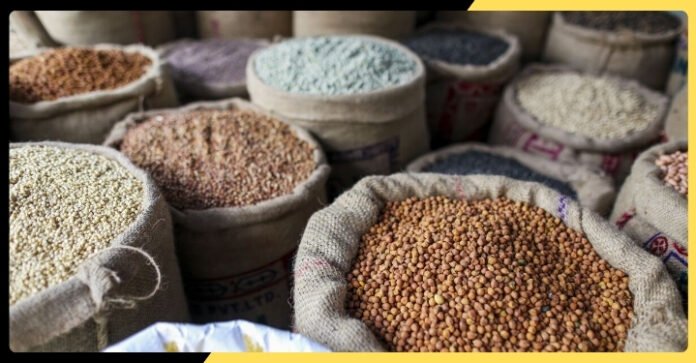

The White House has quietly amended its official trade factsheet on India, removing a reference to “pulses” from a previously published section outlining bilateral agricultural trade. The revision, though seemingly minor, has drawn attention from trade analysts and policy observers who view such updates as reflective of broader economic, diplomatic, and policy considerations shaping U.S.–India relations.
The original factsheet, released as part of a broader update on U.S.–India economic engagement, detailed key areas of agricultural trade between the two countries. Among the listed commodities were grains, dairy products, fruits, and pulses—a category that includes lentils, chickpeas, and dry beans. Pulses hold particular significance in India, where they are a dietary staple and a politically sensitive agricultural product due to their impact on food security and domestic farming livelihoods.
The revised version of the document no longer includes pulses in its highlighted trade categories. While the administration has not issued a formal explanation for the change, officials familiar with trade communications suggest that such amendments are often made to ensure accuracy, reflect updated trade flows, or avoid misinterpretation of current policy positions.
Agricultural trade between the United States and India has historically been complex. India is both a major producer and consumer of pulses, with domestic production fluctuating due to monsoon variability and regional agricultural conditions. During years of shortfall, India has imported pulses from various countries, including the United States. Conversely, when domestic harvests are strong, India has imposed import restrictions or raised tariffs to protect its farmers.
Because of these cyclical shifts, trade data involving pulses can change significantly from year to year. It is possible that the original inclusion of pulses in the factsheet reflected earlier trade figures that no longer align with the most recent data. Trade experts note that government factsheets often summarize trends rather than provide detailed statistics, and revisions may be intended to maintain precision in official messaging.
The removal may also reflect ongoing trade discussions between the two nations. The United States and India have been engaged in efforts to strengthen economic ties, particularly in areas such as technology, defense cooperation, clean energy, and supply chain resilience. Agricultural market access has frequently been part of broader negotiations, with both sides seeking concessions while protecting sensitive domestic sectors.
For India, agriculture remains a politically charged domain. Millions of small-scale farmers depend on government support systems and protective tariffs. Even minor adjustments to import policies can trigger domestic debate. In recent years, large-scale farmer protests have demonstrated the intensity of public sentiment surrounding agricultural reforms. As a result, references to specific commodities in official bilateral documents can carry symbolic as well as economic weight.
From the U.S. perspective, agricultural exports are a key component of trade diplomacy. American farmers and agribusinesses view India as a large and growing market, particularly as India’s middle class expands and dietary patterns evolve. However, access to the Indian market has often been constrained by tariff and non-tariff barriers, including sanitary and phytosanitary regulations.
The decision to remove pulses from the factsheet does not necessarily signal a policy shift. Trade analysts caution against overinterpreting document edits, emphasizing that such changes are frequently technical in nature. Government communications are routinely updated to reflect new data, correct inaccuracies, or streamline messaging.
Nevertheless, the timing of the amendment has prompted discussion. The update comes amid heightened attention to global food security, supply chain diversification, and strategic economic partnerships. Both the United States and India have expressed commitments to enhancing cooperation in critical sectors, including semiconductors, pharmaceuticals, and renewable energy technologies. Agricultural trade, while sometimes less visible than high-tech collaboration, remains an integral part of the bilateral relationship.
Some observers suggest that removing pulses from the highlighted list could be an effort to avoid drawing attention to a category where trade volumes are currently modest or subject to volatility. Others speculate that the change aims to maintain diplomatic flexibility as negotiations continue on broader trade frameworks.
The White House has not indicated that the amendment reflects any dispute or disagreement between the two governments. In fact, U.S.–India relations are widely described as being at a historic high point, characterized by deepening strategic alignment in the Indo-Pacific region. Trade, while occasionally contentious, has generally been managed through ongoing dialogue and established mechanisms for dispute resolution.
In practical terms, the removal of a single commodity reference is unlikely to have immediate economic consequences. Trade flows are governed by formal agreements, tariff schedules, and market conditions rather than summary descriptions in policy briefs. However, official documents play an important role in signaling priorities and shaping perceptions among businesses, investors, and policymakers.
The episode underscores the dynamic nature of international trade communications. As economic conditions evolve and diplomatic conversations progress, governments frequently adjust how they present trade relationships to the public. What may appear as a small textual change can reflect the careful calibration of language that accompanies complex economic partnerships.
Ultimately, whether the omission of pulses proves to be a routine editorial update or a subtle indicator of shifting trade emphasis remains to be seen. What is clear is that U.S.–India economic ties continue to expand across multiple sectors, and agricultural trade—pulses included—will remain part of that broader conversation.