

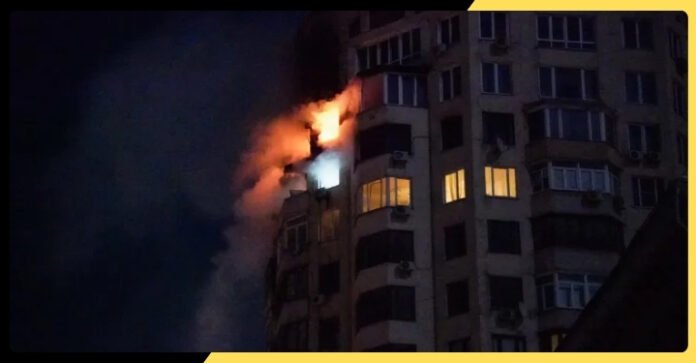

Russia has renewed a wave of attacks across Ukraine, striking cities already locked in deep winter and placing renewed strain on civilians, energy systems, and emergency services. The latest bombardments, carried out with missiles, drones, and artillery, have targeted urban centers and critical infrastructure at a time when freezing temperatures magnify the human cost of disruption.
Ukrainian officials say the attacks are part of a broader effort to weaken the country’s resilience during the coldest months of the year. Air raid sirens have sounded repeatedly across multiple regions, sending residents into shelters as emergency crews work to restore heat, electricity, and water in the aftermath of strikes. In several cities, damaged power lines and heating facilities have left neighborhoods without reliable warmth, forcing families to rely on generators, makeshift stoves, and communal warming centers.
The renewed offensive follows a familiar pattern seen in previous winters, when Russian forces intensified strikes on energy infrastructure. Power plants, substations, and transmission lines have been frequent targets, disrupting heating systems that millions depend on to survive subzero temperatures. Ukrainian authorities say air defenses intercepted many incoming weapons, but some strikes penetrated, causing localized outages and damage to residential buildings.
For civilians, the timing of the attacks is particularly punishing. With temperatures well below freezing, even short interruptions to heating can be dangerous, especially for the elderly, children, and those with medical conditions. Hospitals and clinics have been forced to activate backup power systems, while schools in some areas have shifted to remote learning or suspended classes altogether due to safety concerns and lack of heat.
In Kyiv and other major cities, municipal workers have raced to repair damage between air alerts. Crews often work through the night in hazardous conditions, repairing lines and clearing debris while the risk of further strikes remains. Officials have urged residents to conserve energy, prepare emergency kits, and heed warnings, emphasizing that the situation could remain unstable as winter continues.
Russia has not significantly altered its public justification for the attacks, maintaining that it is targeting military and strategic assets. Ukraine and its allies reject that claim, pointing to repeated strikes on civilian infrastructure and residential areas. International observers and humanitarian organizations have echoed concerns about the impact on civilians, warning that winter attacks exacerbate humanitarian needs and displacement.
The renewed strikes also carry military and political implications. Analysts say Russia may be seeking to pressure Ukraine by exploiting seasonal hardships, hoping to sap morale and complicate logistics. Winter conditions make repairs slower, increase fuel consumption, and stretch supply chains, all of which can affect both civilian life and military operations. At the same time, Ukraine’s ability to maintain basic services under fire has become a key measure of resilience, closely watched by partners abroad.
Ukraine’s leadership has responded by calling for continued and expanded international support, particularly in air defense systems and energy equipment. Officials argue that improved air defenses can reduce the impact of strikes, while transformers, generators, and repair materials are essential to restoring services quickly. Western allies have pledged assistance in past winters, and Ukrainian authorities are again urging timely deliveries as attacks intensify.
Beyond the immediate physical damage, the psychological toll of winter bombardment is significant. Residents describe a grinding routine of alarms, darkness, and cold, punctuated by moments of fear and uncertainty. Families sleep in coats, keep flashlights and power banks close at hand, and plan daily life around the possibility of sudden outages. Mental health professionals warn that prolonged exposure to such stress can have lasting effects, particularly on children.
Despite the hardships, signs of adaptation and solidarity remain visible. Community centers have opened their doors as warming hubs, volunteers distribute hot meals and blankets, and neighbors check on one another during outages. In many cities, public transport continues to operate even during blackouts, powered by backup systems and staffed by workers determined to keep daily life moving.
As winter drags on, the risk of further attacks remains high. Ukrainian officials caution that residents should be prepared for fluctuating conditions and renewed strikes, while emergency services continue to refine response plans. The coming weeks are likely to test both infrastructure and endurance, as cold weather and conflict intersect once again.
The renewed attacks underscore a stark reality of the war: that seasonal change does not bring respite, but often a shift in tactics with profound humanitarian consequences. For Ukraine’s frozen cities, the challenge is not only to withstand the cold, but to do so under fire—keeping lights on, homes warm, and communities intact in the face of renewed assault.